In recent years, the Australian modular building market has seen remarkable growth. From construction site offices in Sydney and Melbourne, to workforce accommodations in Queensland and Western Australia's mining regions, to boutique eco-resorts in Byron Bay and the Gold Coast — Australian developers, contractors, and even individual homeowners are increasingly turning to Chinese-manufactured modular buildings.
However, during our interactions with Australian buyers, we've noticed a common gap: many are not fully aware of the complete process and total costs involved in procuring an Australian-certified modular home. Some focus only on product pricing, overlooking certification and logistics; others emphasize ex-factory costs, neglecting local compliance expenses.
Today, we break down the entire procurement journey and cost structure from a genuine Australian buyer's perspective.
I. The Real Procurement Process: From Enquiry to Handover — How Many Steps?
Step 1: Needs Assessment & Project Definition
The first step isn't looking at products — it's clarifying the project's classification. Will the building be used for permanent residential (Class 1a), commercial support (Class 2-9), or temporary site accommodation (Class 10a)? Different classifications require different certification pathways and product configurations.
At this stage, buyers typically need to define: floor area, number of rooms, storeys, architectural style, functional requirements (e.g., kitchen/bathroom fit-out), and project location (to determine climate zone, wind region, and bushfire attack level).
Step 2: Design Phase & Compliance Pre-Assessment
Once requirements are confirmed, the manufacturer produces preliminary design drawings. The key here isn't just aesthetics — it's compliance: Does the structural design meet AS/NZS 1170 wind and seismic load requirements? Does the energy efficiency design comply with NCC Section J or state-specific requirements? Does the fire protection design satisfy AS 3959 bushfire attack level requirements?
This stage often requires early involvement from an Australian registered engineer (e.g., RPEQ) or a building certifier to verify the design is compliant, avoiding costly rework later.
Step 3: Quotation & Contract Signing
After the design is confirmed, the manufacturer issues a formal quotation. Quotations typically break down into several components: the product itself (shell/standard specification/full turnkey), design and certification fees, packaging costs, inland transport to Chinese port, ocean freight, Australian port charges, and Australian inland transport and installation costs. Many buyers compare only the "ex-factory price" and overlook downstream costs — this is the most common trap.
When signing contracts, it is recommended to clearly specify: Incoterms (FOB/CIF/DDP), payment milestones, delivery lead time, warranty terms, and liability provisions.
Step 4: Manufacturing & Quality Inspection
After the contract takes effect, production begins per the approved drawings. Lead times vary by project scale and complexity, typically 4-12 weeks.
Quality inspection during production is critical. Genuine Australian Standard products require traceable quality documentation: steel material test reports, weld inspection records, insulation material test reports, electrical system test records, and more. It is advisable for buyers to arrange third-party inspections or request comprehensive production progress photos and test reports from the manufacturer.
Step 5: Export Clearance & Ocean Freight
After production is completed and factory inspection passed, the export phase begins: booking shipping space, export customs clearance, container loading, and ocean freight.
Costs at this stage include: ocean freight (highly volatile with international shipping markets), insurance, destination port terminal handling charges (THC), and documentation fees.
Step 6: Australian Customs Clearance & Inland Transport
Upon arrival at an Australian port (e.g., Sydney, Melbourne, Brisbane, Fremantle), the goods must go through import clearance. This involves: customs duty (typically 5%), GST (10%), customs broker fees, and port storage charges (delays can incur additional costs).
After clearance, goods are transported inland to the project site. Australia's vast distances mean inland transport costs vary dramatically — from a few hundred AUD to inner Sydney, to several thousand or even tens of thousands of AUD to remote mining sites in WA or the NT.
Step 7: On-Site Installation & Final Inspection
Once delivered to site, the local installation team handles craning, unfolding, securing, and utility connections. Modular homes require minimal on-site work — typically 1-3 days for installation, compared to months for traditional construction, saving significant time and labor.
After installation, the certifier or local council conducts final inspection and issues the Occupation Certificate (OC) — the essential document for legal occupancy or use of the building.
II. Cost Breakdown: Where Does the Money Go?
Many Australian buyers focus solely on "product price," but the total cost of an Australian Standard modular home consists of multiple components. Below is a full-chain breakdown from factory to occupancy:
1. Product Cost (typically from 40%-60%)
The base component, including: main structure (steel frame, wall panels, roofing, flooring), windows and doors, insulation, internal and external finishes, pre-installed electrical and plumbing, kitchen and bathroom fixtures, etc. Higher specifications mean higher product cost share.
2. Design & Certification Costs (typically 5%-10%)
This is often overlooked but constitutes the core cost of "Australian Standard" compliance. Includes: Australian engineer structural calculations and certification fees, energy efficiency reports, bushfire attack level assessments (where applicable), state-specific compliance documentation, etc. A complete certification package can cost from several thousand to tens of thousands of AUD.
3. Packaging Costs (typically 2%-5%)
Export packaging requirements are far more stringent than domestic transport. Typically includes: steel frame reinforcement, moisture barrier treatment, waterproof covering, marking and labeling, etc., ensuring goods remain undamaged during sea freight.
4. Domestic Inland Transport (China) (typically 2%-5%)
Transport from the factory to the Chinese export port (e.g., Guangzhou Port, Shenzhen Port).
5. International Ocean Freight (typically 10%-20%)
Highly volatile with international shipping market fluctuations. 20ft and 40ft container rates differ, and destination port location affects pricing. China to Australia's east coast (Sydney/Melbourne) is typically cheaper than to Western Australia (Fremantle).
6. Australian Import Duty & GST (typically 10%-15%)
- Customs Duty: Typically 5% (rate depends on product HS code)
- GST: 10% (calculated on the duty-inclusive value)
7. Australian Customs Clearance & Port Charges (typically 3%-8%)
Includes: customs broker fees, port handling fees, documentation fees, quarantine inspection fees (where applicable), etc.
8. Australian Inland Transport (typically 5%-15%)
Transport from destination port to project site. The further the distance and more complex the route, the higher the cost. Remote areas like WA mining regions or the NT can cost many times more than urban areas.
9. On-Site Installation Costs (typically 5%-10%)
Includes: crane hire, installation labor, utility connections, tools and consumables, etc. Australian labor costs are high, but modular home on-site installation is brief, keeping total costs manageable.
10. Other Miscellaneous Costs (typically 2%-5%)
Includes: insurance premiums, bank fees, exchange rate fluctuation losses (when pricing in RMB), site preparation costs (e.g., foundation works), etc.
III. Common Misconceptions & Practical Advice
Misconception 1: Comparing Only Ex-Factory Prices
Many buyers ask "How much per square meter?" and compare only factory quotations. However, the real cost difference often lies after ex-factory: Are certifications complete? Is packaging up to standard? Is the logistics plan optimal? These are where the gaps appear.
Advice: Request a complete quotation covering certification, packaging, and logistics — not just the product price.
Misconception 2: Underestimating Certification Costs
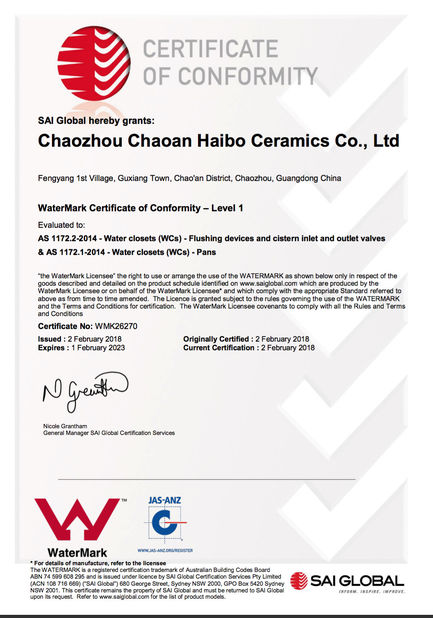
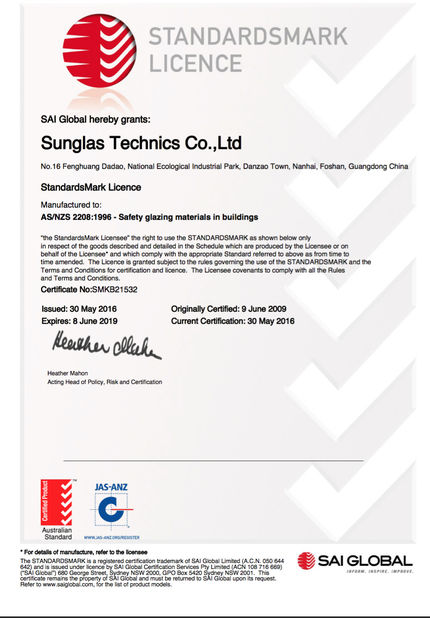
A genuinely Australian NCC/AS/NZS-compliant modular home requires not just "a piece of paper" but a complete set of traceable technical documentation. If a supplier claims "Australian Standard compliant" but cannot produce a full certification file package, exercise extreme caution.
Advice: Request certification pathways and estimated costs at the design stage, and clearly allocate certification responsibilities in the contract.
Misconception 3: Overlooking Local Installation & Inspection
Having the building delivered isn't the end of the project. Installation and inspection requirements vary across Australian states — if the installation team is unfamiliar with local codes, inspection failures may occur, leading to additional rectification costs and delays.
Advice: Confirm in advance whether the installation team has Australian project experience and is familiar with local council inspection requirements.
IV. Summary
Procuring an Australian-certified modular home isn't simply "buying a box and shipping it over." It's a systematic process — from design compliance to production quality control, from international logistics to local clearance, from on-site installation to final inspection — every step carries corresponding costs and risks.
A truly reliable supplier will help you understand the full-chain costs and processes at the quotation stage — not just provide an "ex-factory price" and leave you to figure out everything else.
KONBUILD — Australian Certified Modular Homes. Transparent delivery from design to occupancy.
For more information on Australian certification standards, project quotations, or custom solutions, please contact us.
© KONBUILD — A Brand of RAD Group. Engineered for Australia. Built to last.
www.konbuild.com
www.expandablecontainerhouse.com
Business/Project Contacts:
- +86 13288285314 (WhatsApp)
- +86 13924859314 (WeChat)
#KONBUILD
#AUstandardhouse
#AUcabins



 Your message must be between 20-3,000 characters!
 English